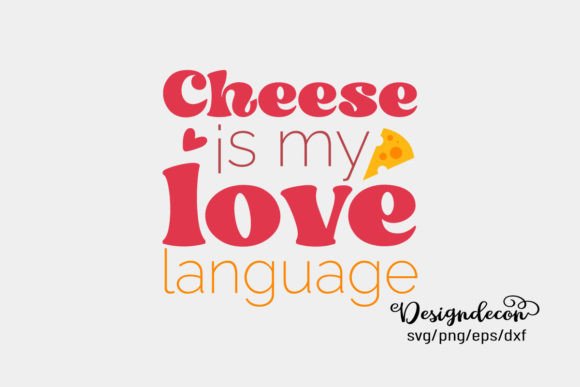
Cheese is My Love Language Retro Groovy
Let’s be real: I opened Cheese is My Love Language Retro Groovy expecting playful charm—and got it instantly. But as someone who’s stitched hundreds of designs onto everything from baby onesies to boutique aprons, my first question isn’t “Is it cute?” It’s “Will this hold up—visually and structurally—when it’s actually stitched, sold, and loved?” So I pulled it into my embroidery software, scaled it for a 4” hoop, and ran it through the mental checklist I use before committing to any design for client work or my own craft business.
A Retro Vibe That Lands—Without Overpromising
The layout feels intentional, not just nostalgic. Rounded sans-serif lettering with subtle groovy curves, a soft heart motif integrated into the “O” of “Love,” and balanced negative space give it breathing room—not the cramped, over-decorated energy some retro designs fall into. It reads clearly at 3.5”, which means it works cleanly on sweatshirt chests, tote bag corners, and tea towel hems. As an embroidery file, its vector foundation (EPS/SVG/DXF) means no pixelation when resizing, and the clean paths translate well to satin stitch outlines and smooth fill areas. No jagged edges, no hidden anchor points that’ll trip up your machine. That’s half the battle won before you even thread your needle.
Where It Shines in Real Projects
I tested Cheese is My Love Language Retro Groovy on a medium-weight cotton canvas tote—exactly the kind I sell at local craft fairs. Stitched with 40-weight polyester thread and medium tear-away stabilizer, it came out crisp, legible, and full of personality. The letterforms held their shape without excessive stitch density, so the fabric didn’t pucker or stiffen unnaturally. On a brushed cotton sweatshirt? Same story—no sinking into the nap, thanks to its open spacing and moderate height-to-width ratio.
It also translated beautifully into a small embroidered patch (2.75” wide), heat-applied to denim jackets. The heart detail stayed recognizable, and the retro styling reinforced the handmade product’s authenticity—something Etsy sellers and small shop owners know customers pay extra for. For holiday embroidery like Valentine’s Day gifts or wedding favors (think cheese board towels or mini pillow covers), it adds warmth without cliché. And yes—it works for baby embroidery too, especially on organic cotton bibs or burp cloths, as long as you reduce size to ~2.25” and confirm thread colors are soft and non-irritating.
Where to Pause—and Plan Ahead
This isn’t a one-size-fits-all embroidery file. Its charm lives in its rhythm and spacing—so shrinking it below 2” risks losing legibility in the smaller letters (“is,” “My,” “Retro”). Tiny “i” dots and the inner curve of the heart can vanish on dense fill stitches if you don’t adjust underlay or reduce density manually. I’d avoid using it full-size on stretchy knits (like ribbed t-shirt necklines) without excellent cut-away stabilizer and careful hooping—those curves demand stability.
On dark fabric? Absolutely fine—but test your thread contrast first. Light yellow or cream thread pops nicely against navy or charcoal, but pale pink might disappear. And while it’s labeled “easy to color change,” remember: swapping colors mid-design affects how satin stitch direction flows across curves. A quick black-and-white mockup preview helps spot tonal flattening before stitching.
What It Does for Your Craft Business—Beyond the Stitch
Cheese is My Love Language Retro Groovy strengthens brand consistency for makers who lean into wit and warmth—think artisanal food shops, kitchen boutiques, or gift brands built around personality-driven storytelling. It doesn’t scream “mass-produced.” Instead, it feels like a thoughtful detail: the kind of custom apparel touch that makes a customer pause, smile, and tag a friend. That emotional resonance lifts perceived value—especially for personalized gifts and small shop merchandise.
For Etsy sellers, it’s a smart digital embroidery file to bundle: pair it with matching SVG files for sublimation mugs or printable cards, and you’ve got a cohesive Graphics collection. Just verify licensing terms before listing finished products—some retro-themed assets have usage restrictions for commercial embroidery, even if the file itself is vector-ready.
Designer Notes You’ll Actually Use
- Always test on scrap fabric first—especially with textured or napped surfaces. What looks great on screen may need adjusted tension or stabilizer weight in practice.
- Check stitch density before running large batches. This design doesn’t overload, but if you’re adding it to layered garments (like reversible aprons), confirm it won’t create stiffness or bulk.
- Confirm hoop size compatibility. At full scale (~4”), it fits standard 4x4 hoops—but double-check your machine’s max dimension, especially if nesting it with other elements.
- Inspect small details at 200% zoom in your embroidery software. That heart inside the “O”? Make sure its curves convert cleanly to satin stitch—not a series of tiny jumps.
- Use proper stabilizer: medium tear-away for stable wovens, cut-away for knits or lightweight fabrics. Skipping this step undermines the entire retro charm.
- Review licensing before selling finished items or reselling the digital embroidery file. “Commercial use” isn’t implied just because it’s a Crafts category download.
In short: Cheese is My Love Language Retro Groovy isn’t just another Valentine’s Day graphic. It’s a well-structured, adaptable embroidery file with real project legs—whether you’re embroidering a single personalized gift or building a seasonal line for your small shop. It respects the craft, honors the customer’s eye, and leaves room for your voice as a designer. That’s rare. And worth stitching.